[Illinois · Rooftop solar leasing]
Illinois rooftop solar leasing for commercial property owners
Turn your roof into a 20–25 year revenue stream. A community solar developer leases your roof, builds and runs the system at no cost to you, and pays you rent. Lumen runs the competitive bid so you get the best offer.
$0.30–$1.25
/ ft² / yr
2%
$0
Trusted by the world's leading real estate owners




[What it is]
What is community solar rooftop leasing?
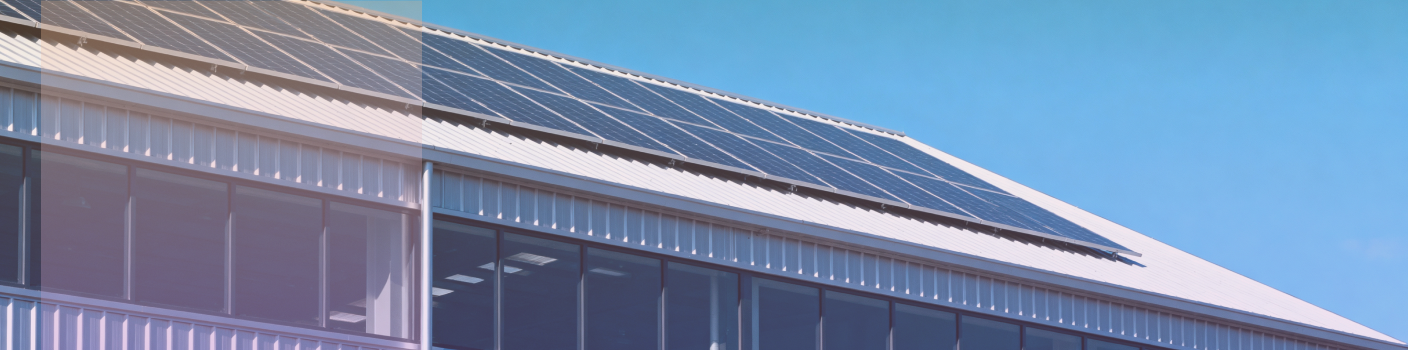
Community solar rooftop leasing lets an Illinois property owner rent roof space to a solar developer for 20–25 years. The developer builds, owns and operates the system, sells the power as bill credits to local subscribers under the Illinois Shines program, and pays the owner rent. You spend nothing.

Your roof, their power plant.
The developer pays for design, permitting, construction, insurance and maintenance. You collect rent.

The power serves your community.
Electricity flows to the grid. Nearby homes and businesses on ComEd or Ameren subscribe and get credits on their utility bills.

Nothing changes for your tenants.
Tenants don't sign anything or change their utility service. The system sits on the roof and connects to the grid, not the building.
Rooftop solar lease
Battery ground lease
Space used
Roof
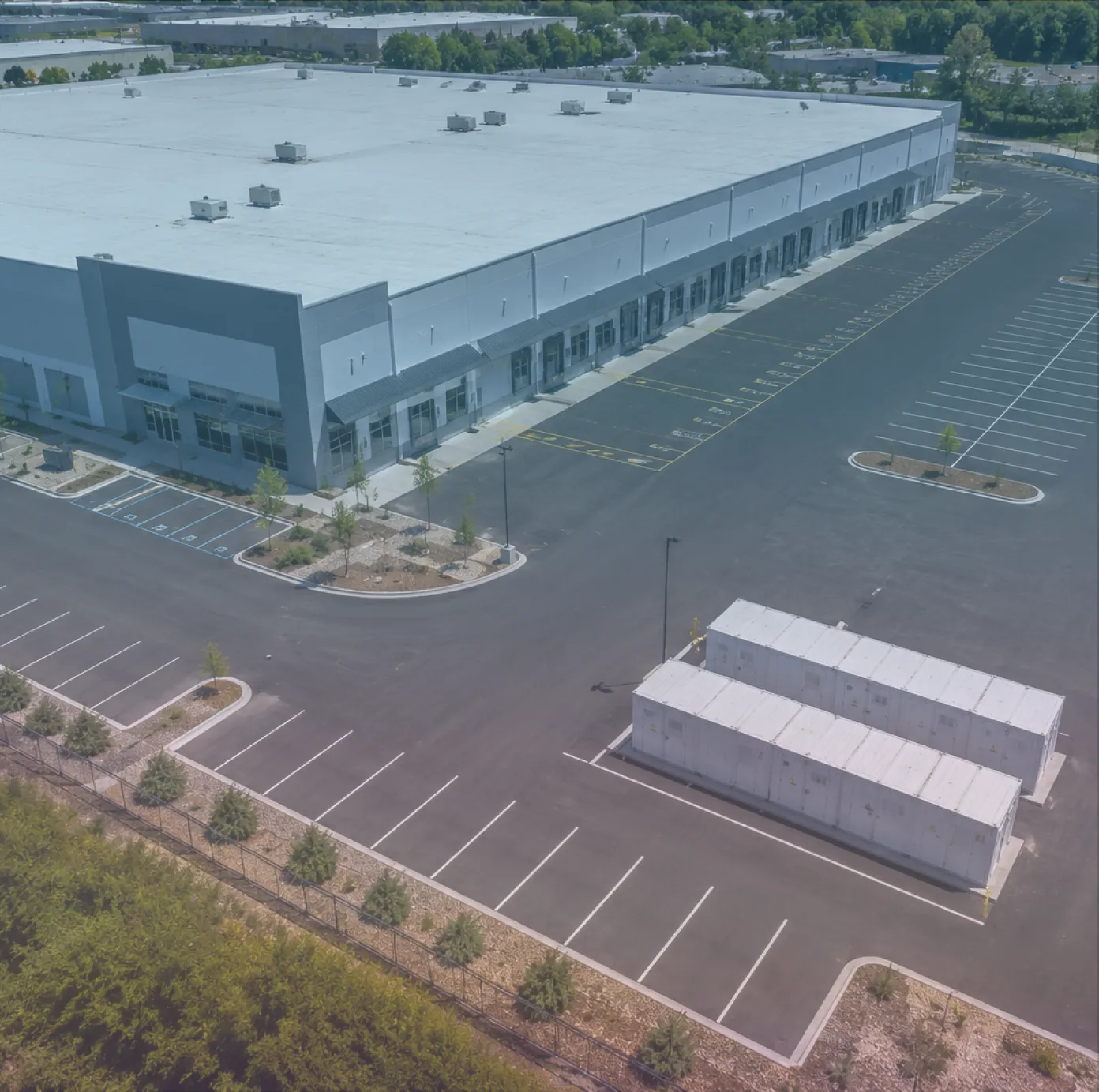
10,000–15,000 ft² of excess land or parking
Typical rent
$0.30–$1.25 / ft² / yr
$6–7 / ft² / yr
Term
20–25 years
25 years
Utility territory
ComEd and Ameren
ComEd
Owner cost
$0
$0
[The offer]
What an Illinois roof lease pays
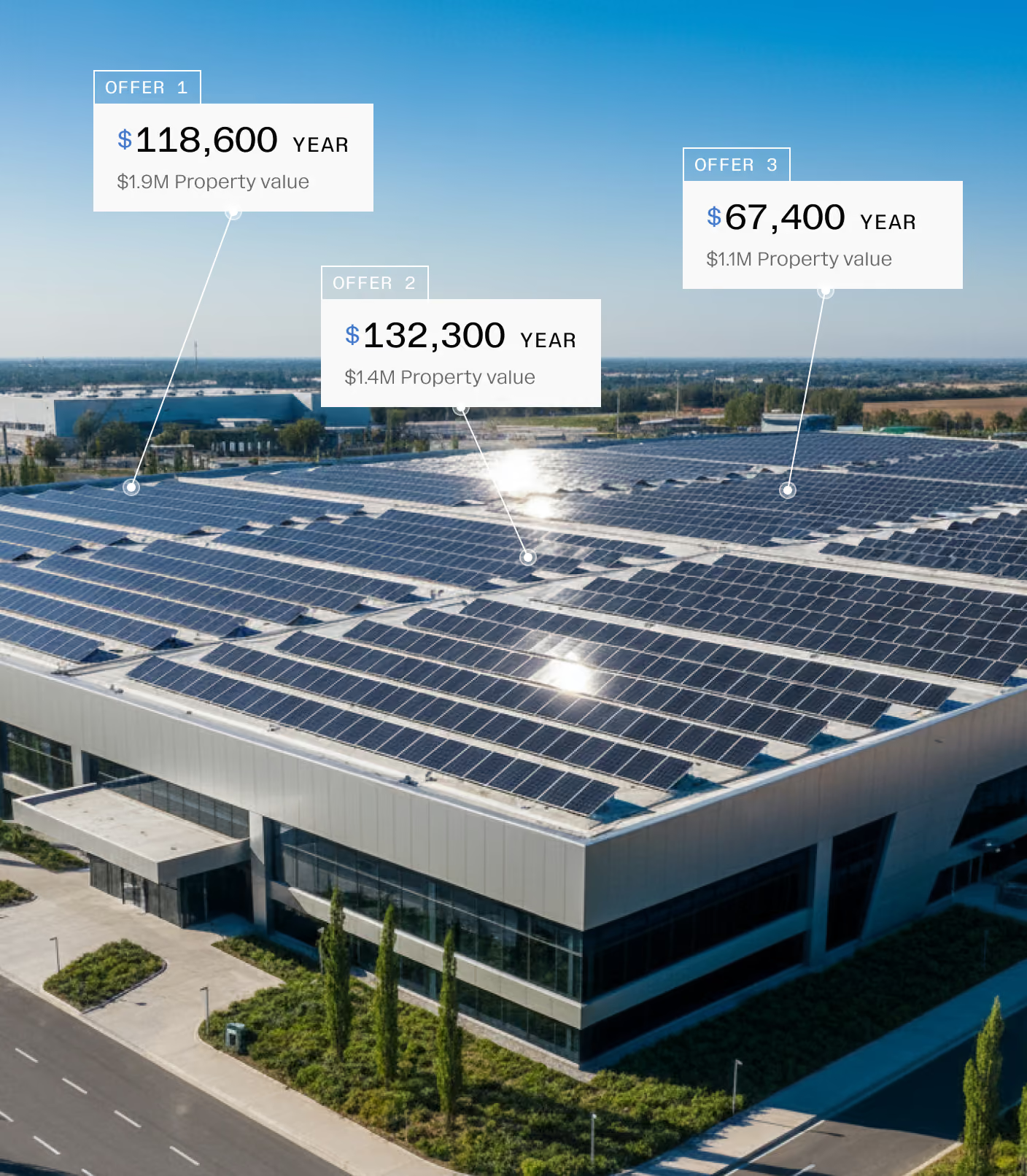
Illinois rooftop leases typically pay $0.30–$1.25 per square foot of usable roof per year, fixed for 20–25 years. A 200,000 ft² warehouse roof at that range earns roughly $60,000–$250,000 a year.
What the developer covers
Design, permitting and interconnection
Construction, insurance and system taxes
Operations and maintenance for the full term
Roof protection and removal at lease end
What you keep
Ownership of the building and roof
100% of the lease payment
The right to sell or refinance
A restored roof when the lease ends
Rooftop solar supports ESG and GRESB reporting and gives sustainability-focused tenants and investors a visible story.
Several developers, one roof: why Lumen runs a bid
Lumen models every roof with its Lux Engine, then puts qualified sites out to bid. 5+ vetted developers compete. Offers on the same roof can differ by up to 4.3x, and you keep 100% of the rent. The winning developer pays Lumen's fee.
5+
vetted developers bid on every Lumen site
Up to 7.8x
spread between the lowest and highest bid on the same site
Pre-screened
we check distribution-utility capacity for you
100%
you review every bid and keep 100% of the lease
[Why Illinois, why now]
Is Illinois Shines still accepting community solar projects?
Yes, but competition for a spot is tight.
Illinois Shines releases new community solar capacity every program year starting June 1.
When a year’s capacity fills, the program scores new projects and places qualifying ones on a waitlist that gets first claim on the next year’s capacity. A developer can only apply once it has a site under contract, and projects that apply after capacity fills go to the back of the waitlist.

Projects that secure interconnection capacity
get extra points in the program. That’s why developers are signing leases now and getting into the interconnection queue as fast as they can.
New capacity every program year.
Program administrators regularly announce new capacity to help meet the state’s renewable energy goals.
Interconnection rewards speed.
Grid capacity in Illinois is filling quickly. State incentives are drawing a steady stream of new solar and storage projects, and data centers are competing for the same grid capacity. Each utility circuit can only take so much, and the sites that get into the interconnection queue first have the best odds of becoming viable projects.
A scored, competitive waitlist.
Once a year’s capacity fills, a project needs a minimum score to join the waitlist, and no single developer can win more than 20% of a year’s awards. Waitlisted projects get the first share of the next year’s capacity.
Larger projects now qualify.
Illinois’s 2026 grid law (CRGA) doubled the maximum community solar project size to 10 MW, so bigger ground-mount and carport sites now fit the program.
Federal and state incentives flow to the developer, which is what funds your rent.
Which utilities qualify? ComEd or Ameren
Lumen screens buildings statewide, in both of Illinois' major utility territories, ComEd and Ameren.
Incentives and interconnection costs differ by utility territory, so Lumen benchmarks each roof against other buildings in the same utility. Unfortunately, buildings in small munis do not qualify.
Commonwealth Edison
ComEd, Northern Illinois
Market
Chicago, Aurora, Elgin, Joliet, Waukegan, Rockford, Bolingbrook, O'Hare / I-90 corridor, I-55 / I-80 corridor
Ameren
Ameren, Central and Southern Illinois
Market
Springfield, Peoria, Champaign-Urbana, Bloomington-Normal, Decatur, Metro East
[What's on your roof]
What happens on your roof
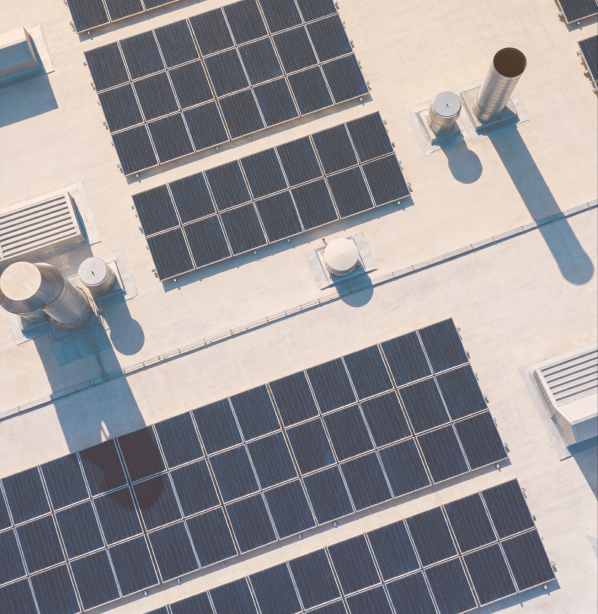
A low-profile, ballasted or attached array that your tenants won't see or hear, installed to protect your roof warranty.

Roof-safe install
Structural review before any design; work done to keep the existing roof warranty intact.

Quiet and clean
No noise, emissions or on-site staff.

Built-in access
Maintenance windows and roof access rules are set in the lease.

Reroof plan
The lease covers removal and reinstallation if the roof needs replacing mid-term.

Fully removable
The developer removes the system and restores the roof at lease end.
Federal and state incentives flow to the developer, which is what funds your rent.
[Qualification]
Is your Illinois roof a good fit?
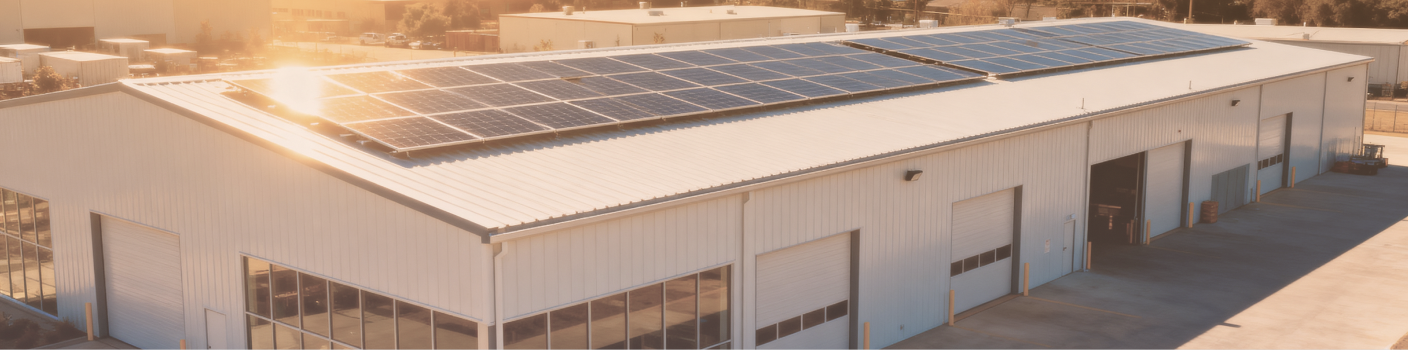
The best Illinois candidates are large, flat, unshaded roofs in ComEd or Ameren territory with grid capacity nearby.
Roof size
Typically 50,000+ ft² of usable roof
Structure
Able to carry the added load
Shade
Little or no shading from nearby buildings or trees
Utility
ComEd or Ameren territory
Grid capacity
Room on the local feeder — the make-or-break factor, which Lumen pre-screens
[Process + payments]
From roof screen to rent check
[1–2 weeks]
Free roof screen
In minutes, Lux Engine checks roof size across your portfolio, building structure, and feeder capacity
[~2 weeks]
Developer bids
Offers come in and Lumen normalizes them
[~2–3 months]
Lease signed
Lumen supports negotiation
[~6-12 MOnths]
Illinois Shines and interconnection
The developer applies to Illinois Shines for a 20-year REC contract and to your utility for an interconnection study
[~6-12 months]
Build and switch-on
Rent begins once the system reaches commercial operation
[FAQ]
What Illinois owners ask before leasing a roof
Most Illinois rooftop leases pay $0.30–$1.25 per square foot of usable roof per year for 20–25 years. Your rate depends on roof size, utility territory, grid capacity and developer demand, which is why Lumen puts every site out to competitive bid.
It's a long-term lease of your roof to a developer who builds a solar system and sells the power as bill credits to local subscribers. You earn rent and pay nothing.
With a lease, the developer owns the system and the power goes to the grid, not your building. You take no capital or operating risk and earn fixed rent instead of energy savings.
Not usually. Unless your tenants have roof rights, they don't sign anything and their utility service doesn't change. Some may choose to subscribe for bill credits.
Typically 50,000 ft² or more of flat, unshaded roof. Smaller roofs can work when grid capacity is strong.
Leases set out how the developer removes and reinstalls the system for a mid-term reroof. See our Lumen Solar Index Issue 2 for more detail.
No. Lumen-assisted leases require installers to work to your roofer's warranty terms, and Lumen reviews this during negotiation.
It costs you nothing. The winning developer pays Lumen's fee, only if the project is built.
The lease transfers with the property. Long-term, contracted rent can add to the property's value; Lumen helps with lender consent when needed.
The developer pays any tax on the solar system itself.
Both qualify. ComEd (northern Illinois, Illinois Shines Group B) has more open program capacity this year; Ameren (central and southern Illinois, Group A) has less.
No. Rent is set by the lease, not by how much power the system makes. Systems are engineered for Illinois snow loads as part of the structural review.
Rent usually starts once the system is operating, often 12–24 months after the lease is signed.
Yes. Many Illinois properties qualify for both, and Lumen screens them together. See battery storage land leasing.
A single developer offers one price. Lumen runs a competitive bid among 5+ vetted developers, and bids on the same site can differ by up to 4.3x.
[Get started]
See what your Illinois roofs could earn
[01]
Send us your Illinois addresses
[02]
We screen every roof against ComEd and Ameren grid capacity, free
[03]
Compare developer offers side by side
*Lease rates based on solar rooftop leases contracted in 2026 in comparable areas.