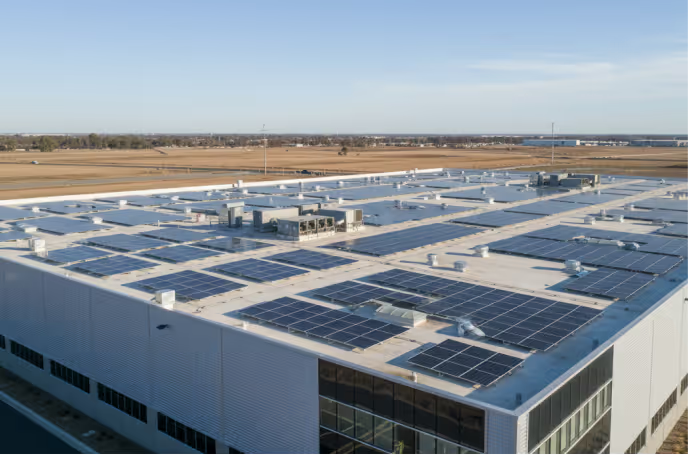
When you're considering rooftop solar to generate passive income or bills savings for your commercial portfolio, one of the first questions that comes up is: What exactly are we doing to the roof?
The good news: modern commercial solar installations are recognized for long term compatibility with most roof commercial types. And when you work with the right partners, every physical change is carefully engineered, permitted, and executed to the highest safety and compliance standards.
The two main mounting approaches: fully ballasted vs. hybrid
Commercial solar installations use one of two primary mounting methods, depending on your roof type, structural capacity, and local building requirements.
Fully ballasted (non-penetrating) systems
Because there are no holes in your roof, there's no risk of creating new leak points. The ballast system is engineered to resist wind uplift and meet local building codes for your specific climate and geography.
Hybrid of ballasted and attached (mechanically fastened) systems
On sloped roofs, metal roofs, or where full reliance on ballast isn't structurally feasible, solar developers introduce mechanically attached mounting systems.
- Mounting brackets are secured directly to a component of the roof structure
- Penetrations are made through the roof surface at engineered intervals—sometimes limited to corners or edges in hybrid systems that include ballasting
The number varies based on structure limitations, roof type, and local wind/snow load requirements. A standing seam metal roof might not have any mounting penetrations while a R panel metal roof might have 9 anchors per kW of solar—a hybrid system on a flat roof that incorporates ballasting will fall in between these extremes based on design goals.
What else changes on your roof?
Beyond the solar panels on a mounting system itself, a few other physical components are added:
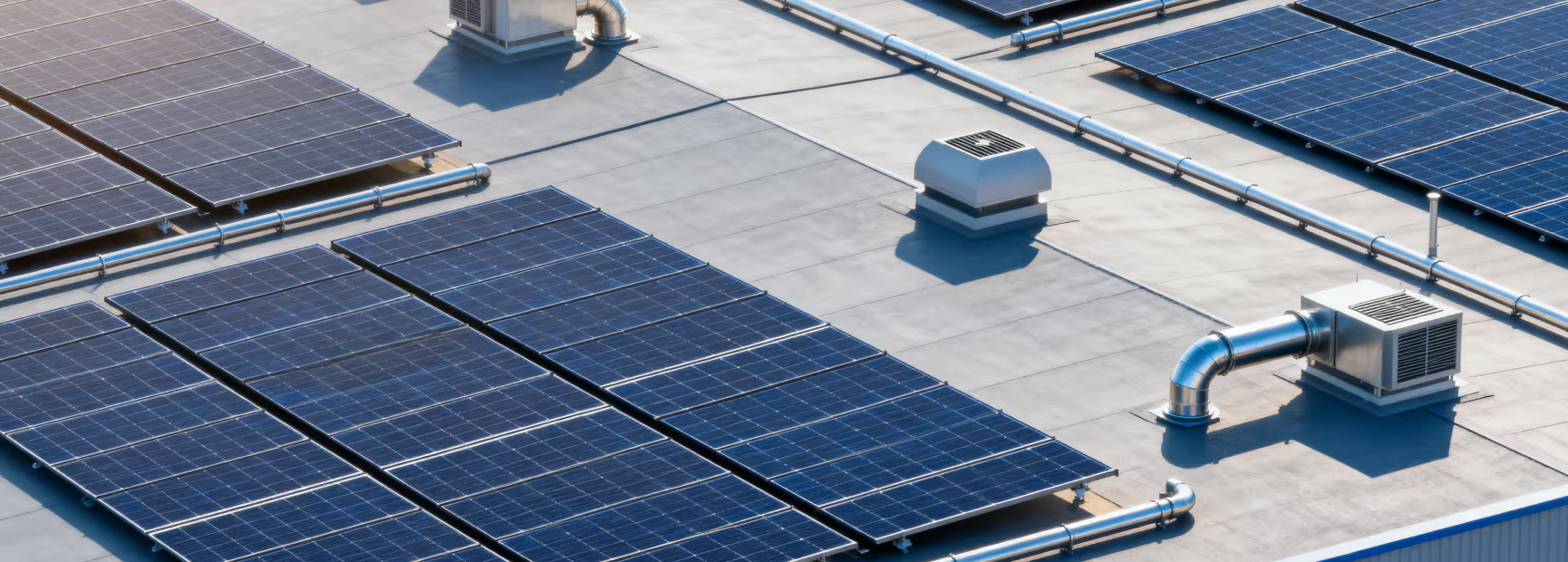
Electrical conduit and wiring
- DC wiring runs from solar panels to inverters (typically located on roof level)
- Wiring is routed into conduits or cable trays mounted on top of stands with rubberized bases—designed to limit trip hazards and drainage obstructions
Inverters
- Inverters (which convert DC power from groups of panels to AC power synchronized with grid electricity) are typically mounted on the roof but could be mounted at ground level
- If roof-mounted, they're placed on ballasted pads or secured to structural supports
Walkways and maintenance paths
- Layouts also preserve access to HVAC units and other equipment requiring maintenance.
Fire setbacks and code compliance
- Fire code requires clear zones along roof edges and as needed for firefighter operations
- Solar layouts respect these setbacks—typically 4–6 feet from edges and aisles not more than 150ft apart
How Lumen Energy ensures safety and compliance
1. Roof documentation
Before any solar developer makes plans for your property, Lumen reviews and documents everything know about the roof including type, condition, and warranty expiration. With collected information, Lumen:
- Compares remaining roof life to solar asset life of 20-25 years: We identify properties where roof in current form will require reconditioning or replacement during the lifetime of the solar array
- Considers upgrade or replacement options: Lumen performs an economic assessment on whether replacing or reconditioning roof ahead of solar installation produces more net value than waiting for roof replacement to perform a future solar installation
- Produces recommendations: Based on details of the roof and owner’s approach to capital improvements, we produce one or more approaches to producing attractive bids. In some circumstances, the solar project provide upfront capital for, or include roof improvements
This upfront screening ensures you never move forward with options that ignore roof life—and helps you plan strategically for properties that need roof work before they're solar-ready.
2. Competitive bidding with vetted, experienced developers
- Track record of successful commercial installations with verifiable references
- Engineering teams experienced in commercial roof integration and structural analysis
- Strong safety standards that include training, OSHA compliance, and incident tracking
- Adequate insurance coverage—typically $2M–$5M+ in general liability and workers' compensation insurance
3. Rigorous engineering review and structural validation
- Mounting system design tailored to your specific roof type and building structure
These engineering deliverables are completed and reviewed before any construction begins—giving you (and your internal engineering team, if applicable) full confidence in the safety of the installation.
4. Building code and permitting compliance
- International Code Council (ICC) and local codes for structural, fire, setbacks, and electrical safety
Solar developers handle the permitting process—but as your broker, Lumen Energy tracks development progress and requires projects don't move to construction until all required permits are in hand.
5. Roof warranty coordination and protection
- Submit mounting plans and roof protection details for manufacturer review and approval
Many roofing manufacturers (GAF, Firestone, Carlisle, etc.) have established solar installation protocols and will provide warranty letters specifically covering solar mounting systems—if the work is done correctly.
6. Quality assurance during installation
- Installation progress monitoring to ensure the project stays on schedule
- Expert review if safety or quality problems arise during construction
This end-to-end partnership means you have a trusted advocate throughout the entire process—not just during the sales and contracting phase.
What happens if issues arise (developer responsibility)?
- Issue identification: You (or your property management team) notice a problem and notify the developer and Lumen Energy
- Cause determination: A qualified roofing professional inspects to determine if the issue is solar-related or pre-existing
- Repair coordination: If solar-related, the developer mobilizes repairs under warranty. If unrelated, your standard roof maintenance process applies
- Follow-up verification: Lumen Energy helps ensure repairs are completed promptly and correctly
In our experience, serious roof issues directly caused by solar installations are rare when working with vetted, experienced developers. But when issues do arise, having a broker in your corner ensures they're resolved quickly and fairly.
The bigger picture: risk vs. reward
Yes, solar installations make physical changes to your roof. But when executed properly:
- Roof integrity is maintained
- All work is permitted and code-compliant
- Warranties remain in place or restart if including roof reconditioning or replacement
- You generate predictable cash flows for 20+ years
- You have opportunity to source clean, locally-produced energy without capital expenditure
The alternative—leaving rooftops underutilized while they generate zero revenue—carries its own risk: opportunity cost.
Commercial real estate owners across the country are successfully deploying solar at portfolio scale. The key is working with partners who understand your concerns, have the technical expertise to address them, and have the financial alignment to protect your interests.
Ready to explore your portfolio's solar potential?
Lumen Energy's Lux Engine delivers property-specific financial models in days, not months—giving asset management teams the clarity and confidence to turn rooftops into revenue without added complexity.
Our competitive developer marketplace ensures you get the best bids and terms. Our white-glove service means you have an experienced Lumen Advisor managing safety, compliance, and quality from analysis through operation.
And because we're the modern solar broker, we sit on your side of the table throughout—ensuring every physical change to your roof protects your interests and maximizes long-term value.
Let's start the conversation. Contact your Lumen Advisor today to discuss how rooftop leasing can increase NOI with zero CapEx across your portfolio.
Get your free portfolio assessment →
Frequently asked questions
Q: How many roof penetrations are typically required for a solar installation?
A: Most flat commercial roofs use ballasted systems with zero penetrations. Occasionally, a small number of high leverage through-roof attachments may be used at corners or edges in a hybrid approach. For sloped or metal roofs requiring mechanical attachment, penetration density depends on system size and wind/snow loads and roof type. All penetrations are properly flashed and/or sealed to prevent leaks.
Q: Will solar installation void my roof warranty?
A: Not when done correctly. Experienced solar developers coordinate with your roofing manufacturer to obtain written warranty endorsements covering the installation. Lumen Energy ensures this coordination happens before construction begins.
Q: What if my roof needs replacement during the solar project lifetime?
A: It is often best to avoid roof replacement during the solar project lifetime. And, it often produces more value to recondition or move roof replacement forward than to wait for solar installation until a planned roof replacement. Contracting with an option that requires the solar developer to remove and re-install the solar array to accommodate a future roof replacement is also possible, but is often less efficient at maintaining value.
Q: How do you ensure the solar system won't damage my roof during high winds or heavy snow?
A: Every system undergoes structural engineering analysis to confirm it can withstand local environmental loads per building code requirements. Engineers calculate worst-case wind uplift and snow loads, then design mounting systems with appropriate factors of safety. All designs are reviewed by local building officials during the permitting process.
Q: Who is responsible for ongoing maintenance access to the roof?
A: You retain full roof access rights. Solar layouts include designated walkways, and lease agreements specify how access is coordinated when you need to perform roof maintenance or inspections. Solar developers also schedule their own periodic maintenance—typically 1–2 site visits per year.
Q: How does Lumen Energy vet developers for safety and quality?
A: We only work with developers who have proven track records, adequate insurance coverage, licensed engineering teams, and strong safety programs. We verify references, review past project performance, and assess financial stability before inviting developers into our marketplace.
Lumen Energy is the modern solar broker for commercial real estate owners. We provide investment-grade financial analysis, competitive bidding, and white-glove service to help you turn underutilized rooftops into predictable revenue streams—without added complexity. Learn more at lumen.energy.