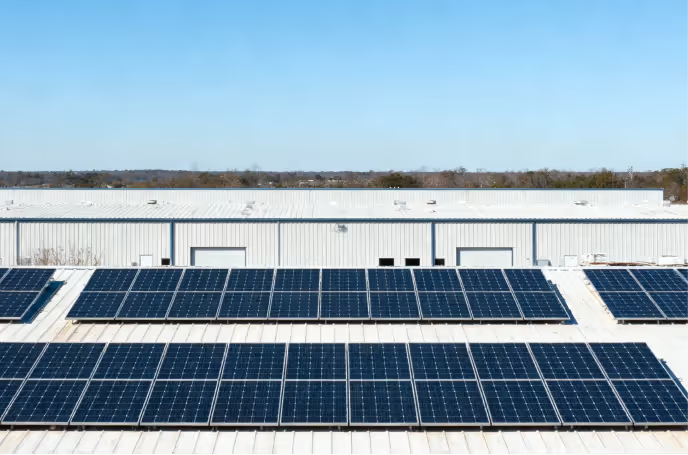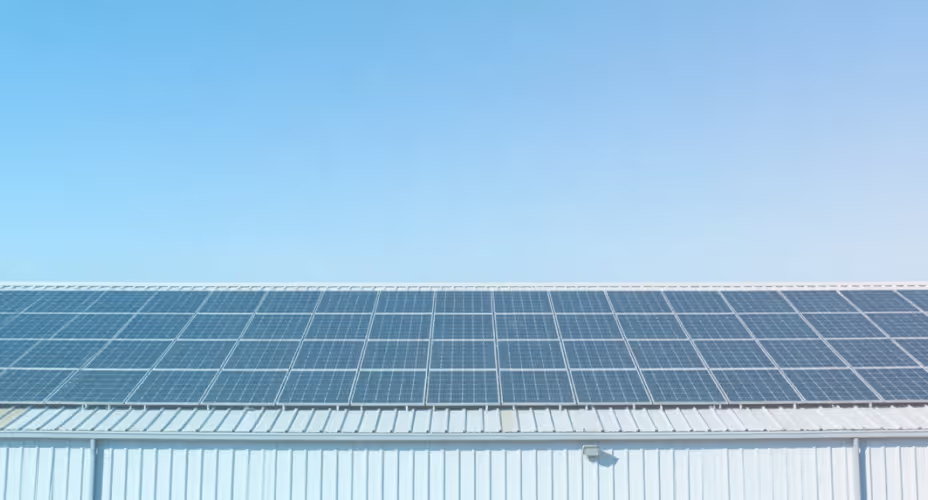
If you're evaluating rooftop leasing as a revenue opportunity for your commercial real estate portfolio, roof integrity is likely one of your first concerns. It's a smart question—and one that comes up in nearly every conversation we have with asset management teams.
The short answer: properly installed solar systems don't damage roofs. In fact, they often extend roof lifespan by shielding the membrane from UV exposure and weather. Here's what you need to know about roof protection, risk mitigation, and how issues are handled if they ever arise.
How solar installations protect your roof
When solar developers design behind-the-meter solar or rooftop leasing projects, roof preservation is a primary consideration—not an afterthought. Modern commercial solar installations typically use one of two mounting approaches:
Fully ballasted (non-penetrating) systems
For flat commercial roofs—the most common scenario for industrial, warehouse, and large retail properties—ballasted racking systems are typically the preferred solution.
What happens physically:
- Solar panels are mounted on metal racking frames
- The racking sits on weighted trays or blocks that hold the system in place through gravity and friction
- Zero penetrations are made through the roof membrane
- Weight is distributed evenly across the roof structure—typically 3–5 pounds per square foot, similar to a layer of snow
Why this matters:
Because there are no holes in your roof, there's no risk of creating new leak points. The ballast system is engineered to resist wind uplift and meet local building codes for your specific climate and geography.
Hybrid of ballasted and attached (mechanically fastened) systems
On sloped roofs, metal roofs, or where full reliance on ballast isn't structurally feasible, solar developers introduce mechanically attached mounting systems.
What happens physically:
- Mounting brackets are secured directly to a component of the roof structure
- Penetrations are made through the roof surface at engineered intervals—sometimes limited to corners or edges in hybrid systems that include ballasting
- Each penetration is properly flashed and sealed using commercial-grade waterproofing materials that match or exceed the roof membrane's performance
- Flashing is integrated with the existing roof system to maintain watertight integrity
Pre-installation: due diligence that protects you
Before any solar equipment touches your roof, multiple layers of assessment protect your interests:
Roof condition evaluation
Reputable solar developers conduct thorough roof inspections as part of their feasibility analysis. If a roof has less than 10–15 years of remaining useful life, most developers will recommend (or require) roof replacement or restoration before installation. Why? Because solar systems last 25+ years, and no one wants to remove and reinstall panels mid-contract due to a failing roof.
When you work with Lumen Energy as your modern solar broker, our Lux Engine provides investment-grade financial analysis that accounts for roof condition across your entire portfolio. We identify properties ready for immediate solar deployment—and flag those that need roof work first, so you can plan accordingly.
Structural engineering review
Every commercial solar project undergoes structural engineering analysis to confirm the roof can safely support the system under worst-case load conditions. These calculations factor in:
- Dead load (weight of solar equipment)
- Live load (maintenance access)
- Environmental loads (wind uplift, snow accumulation, seismic forces)
If a building doesn't meet load requirements, engineers design solutions—such as reinforcing roof structure or using lighter-weight racking—before installation proceeds.
This is where white-glove service makes all the difference. Experienced solar developers work directly with your roofing contractor or manufacturer to:
- Review installation plans and mounting details
- Obtain written approval for penetrations (when required)
- Ensure the solar installation does not void your existing roof warranty
In many cases, roofing manufacturers provide warranty endorsements specifically covering solar installations. Your Lumen Advisor ensures these details are addressed during the bid process, so you have full clarity before signing any agreements.
What happens if a roof issue arises?
Even with rigorous planning, roof issues can occasionally occur. Here's how they're handled:
Developer responsibility and insurance
Commercial Power Purchase Agreements (PPAs) and rooftop lease agreements place clear responsibility on the solar developer for any damage caused by installation or system operation. Standard contract provisions include:
- Installation warranties covering workmanship for 2–10 years
- Liability insurance (typically $2M–$5M+ in coverage) protecting you against property damage
- Restoration obligations requiring the developer to return the roof to its original condition if equipment is removed
If a leak or other issue occurs and is determined to be solar-related, the developer is contractually obligated to repair it at no cost to you.
Clear contractual protections
When Lumen Energy manages your competitive developer marketplace process, we ensure contracts include strong owner protections:
- Right of roof access for inspections and maintenance
- Repair notification timelines requiring prompt developer response
- Indemnification clauses protecting you from third-party claims
- Decommissioning bonds (when applicable) ensuring proper removal and site restoration at end-of-life
Because we sit on your side of the table, your Lumen Advisor negotiates these terms during the bid evaluation phase—before you're locked into an agreement.
Coordinated resolution process
If a roof issue arises during the life of a solar system:
- Initial assessment: You or your property management team identify the issue and notify the solar developer (and Lumen Energy, if we're your ongoing partner).
- Cause determination: A qualified roofing professional inspects to determine whether the issue is solar-related or a pre-existing roof condition.
- Responsibility assignment: If solar-related, the developer mobilizes repairs under their warranty and insurance. If unrelated, your standard roof maintenance process applies.
- Coordination of repairs: The developer and your roofing contractor coordinate access, sequencing, and waterproofing to minimize disruption.
This process is simpler than it sounds—and in our experience, truly problematic issues are rare when working with vetted, experienced solar developers.
The reality: roof damage is rare with professional developers
Across thousands of commercial solar installations nationwide, roof damage directly attributable to solar systems is uncommon. Why?
- Financial alignment: Developers have zero incentive to cause roof problems. Callbacks and repairs eat into their project economics.
- Reputation risk: Commercial solar is a relationship-driven industry. Developers who damage roofs don't stay in business.
- Engineering standards: Building codes, engineering oversight, and manufacturer requirements create multiple checkpoints before installation.
The bigger risk to your roof is often inaction—letting UV exposure and weather degrade your roof membrane while underutilized rooftops generate zero revenue.
How Lumen Energy mitigates risk on your behalf
As your technology-enabled clean energy partner, Lumen Energy adds critical layers of owner protection:
Portfolio-level roof intelligence
Our Lux Engine evaluates roof age, condition, and remaining useful life across every property in your portfolio. This automated feasibility underwriting ensures you never move forward with solar on a roof that's nearing end-of-life—avoiding costly mid-contract complications.
Developer vetting and quality standards
We only invite proven, financially stable solar developers into our competitive developer marketplace. These developers have:
- Track records of successful commercial installations
- Strong balance sheets and insurance coverage
- Engineering teams experienced in commercial roof integration
- Reputations they're protecting with every project
Contract review and negotiation
Your Lumen Advisor reviews every bid package for owner-favorable contract terms, including roof protection provisions. We ensure:
- Warranty responsibilities are clearly defined
- Insurance coverage is adequate for your risk tolerance
- Repair and indemnification language protects your interests
- Roof access and maintenance rights are preserved
Ongoing advocacy
Even after a project goes live, Lumen Energy remains your advocate. If any issues arise during installation or operation, we help coordinate resolution—ensuring the developer honors their commitments and your interests are protected.
Making an informed decision
Roof concerns are valid—and addressing them head-on is part of our commitment to end-to-end partnership. When evaluating rooftop leasing opportunities, ask potential partners:
- How do you assess roof condition before moving forward?
- What mounting systems do you use, and why?
- How do you protect existing roof warranties?
- What happens if a roof issue arises during the contract term?
- Can you provide references from other CRE owners?
The right solar broker—one who truly sits on your side of the table—will have clear, confident answers to every question.
Turn rooftops into revenue, without the risk
Commercial solar done right protects your roof while generating predictable cash flows for 20+ years. With proper due diligence, experienced developers, and a trusted advisor managing the process, roof risk is minimal—and the upside is substantial.
Ready to explore how rooftop leasing can increase NOI with zero CapEx across your portfolio? Lumen Energy's Lux Engine delivers property-specific financial models in days, not months—giving you clarity and confidence to move forward.
Let's start the conversation. Contact your Lumen Advisor today to discuss your portfolio's solar potential.
Frequently asked questions
Q: Will solar panels void my roof warranty?
A: No—not when installed properly with coordination from your roofing manufacturer. Experienced solar developers obtain written approval for their mounting methods, and many roofing manufacturers provide warranty endorsements specifically for solar installations.
Q: What if my roof needs replacement soon?
A: Most solar developers require 10–15+ years of remaining roof life before installation. If your roof is near end-of-life, we'll recommend completing roof work first—or potentially coordinating both projects to maximize efficiency and cost savings.
Q: Who pays if there's a leak caused by solar installation?
A: The solar developer is contractually responsible for any damage caused by their installation. Their liability insurance and workmanship warranties cover repairs at no cost to you.
Q: Can I still maintain my roof with solar panels in place?
A: Yes. PPAs and lease agreements include provisions for roof access, inspections, and maintenance. Panels are installed with adequate spacing for maintenance walkways, and developers coordinate access when you need to perform roof work.
Lumen Energy is the modern solar broker for commercial real estate owners. We provide investment-grade financial analysis, competitive bidding, and white-glove service to help you turn underutilized rooftops into predictable revenue streams. Learn more at lumen.energy.