When you're considering rooftop leasing to generate passive income from your commercial portfolio, one of the first questions that comes up is: What exactly are we doing to the roof?
It's a critical question. Your roof is a major capital asset, and the last thing you want is to compromise its integrity—or create headaches for your property management team—in pursuit of additional revenue.
The good news: modern commercial solar installations are designed to protect your roof, not damage it. And when you work with the right partners, every physical change is carefully engineered, permitted, and executed to the highest safety and compliance standards.
Here's exactly what happens to your roof during a solar installation—and how Lumen Energy ensures safety and compliance at every step.
The two main mounting approaches: ballasted vs. attached
Commercial solar installations use one of two primary mounting methods, depending on your roof type, structural capacity, and local building requirements.
Ballasted (non-penetrating) systems
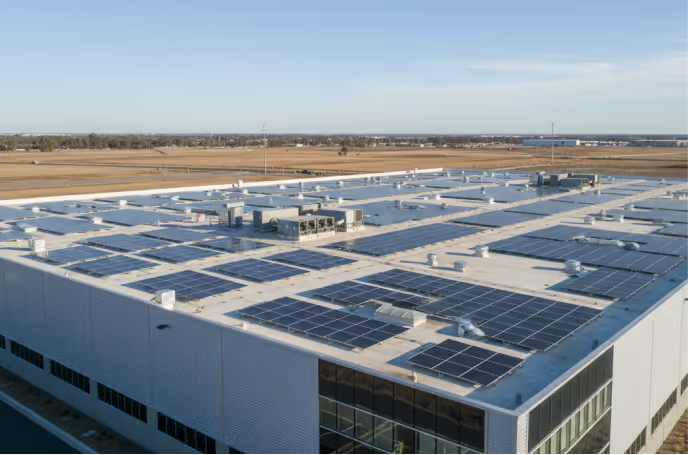
For flat commercial roofs—the most common scenario for industrial, warehouse, and large retail properties—ballasted racking systems are typically the preferred solution.
What happens physically:
- Solar panels are mounted on metal racking frames
- The racking sits on weighted trays or blocks that hold the system in place through gravity and friction
- Zero penetrations are made through the roof membrane
- Weight is distributed evenly across the roof structure—typically 3–5 pounds per square foot, similar to a layer of snow
Why this matters:
Because there are no holes in your roof, there's no risk of creating new leak points. The ballast system is engineered to resist wind uplift and meet local building codes for your specific climate and geography.
Roof protection benefits:
Ballasted systems actually extend roof lifespan by shielding the membrane from UV exposure and thermal cycling. The areas covered by solar panels are protected from the elements—reducing long-term degradation.
Attached (mechanically fastened) systems
On sloped roofs, metal roofs, or where ballast isn't structurally feasible, solar developers use mechanically attached mounting systems that do require roof penetrations.
What happens physically:
- Mounting brackets are secured directly to the roof structure (not just the membrane)
- Penetrations are made through the roof surface at engineered intervals—typically spaced 4–8 feet apart
- Each penetration is properly flashed and sealed using commercial-grade waterproofing materials that match or exceed the roof membrane's performance
- Flashing is integrated with the existing roof system to maintain watertight integrity
How many penetrations?
The number varies based on system size, roof type, and local wind/snow load requirements. A typical 500 kW rooftop system might require 200–400 attachment points spread across a 50,000+ square foot roof—a relatively modest density when properly engineered.
Quality control:
Reputable solar developers follow roofing manufacturer specifications precisely. Many work directly with your roofing contractor or manufacturer to ensure penetrations are installed correctly and don't void your existing roof warranty.
What else changes on your roof?
Beyond the mounting system itself, a few other physical components are added:
Electrical conduit and wiring
- Low-voltage DC wiring runs from solar panels to inverters (typically located at roof level or ground level)
- Conduit is attached to the roof surface or run through cable trays—designed to avoid creating trip hazards or drainage obstructions
- All electrical work is performed by licensed electricians following National Electrical Code (NEC) standards
Inverters and combiner boxes
- Inverters (which convert DC power from panels to AC power for the grid) are mounted either on the roof or at ground level
- If roof-mounted, they're placed on ballasted pads or secured to structural supports
- Combiner boxes consolidate electrical connections—typically small enclosures that don't interfere with roof drainage
Walkways and maintenance paths
- Solar layouts include designated walkways for safe access during maintenance and inspections
- These paths ensure your property management team—and the solar developer's technicians—can access roof equipment without walking on panels
- Layouts also preserve access to HVAC units, exhaust fans, skylights, and other existing roof equipment
Fire setbacks and code compliance
- Local fire codes require clear zones along roof edges, ridges, and around roof penetrations (vents, hatches, etc.)
- Solar layouts respect these setbacks—typically 3–6 feet from edges and 4–6 feet around roof equipment
- These zones allow emergency responders safe access and ventilation paths in case of fire
The bottom line: A well-designed solar installation integrates seamlessly with your existing roof infrastructure—without blocking critical access or creating operational problems.
How Lumen Energy ensures safety and compliance
As the modern solar broker, Lumen Energy sits on your side of the table throughout the entire process—ensuring that every physical change to your roof meets the highest standards for safety, compliance, and long-term performance.
Here's how we protect your interests:
1. Upfront roof assessment and feasibility analysis
Before any solar developer touches your property, our Lux Engine performs automated feasibility underwriting across your entire portfolio. This investment-grade financial analysis includes:
- Roof age and condition screening: We identify properties with roofs that have sufficient remaining useful life (typically 10–15+ years) to support a 20–25 year solar lease
- Structural capacity modeling: We assess whether your building can support the added weight of a solar system under worst-case load scenarios
- Roof type compatibility: We flag properties with roof types that may require special mounting solutions or roof restoration before solar installation
This upfront screening ensures you never move forward with a project that poses roof risk—and helps you plan strategically for properties that need roof work before they're solar-ready.
2. Competitive bidding with vetted, experienced developers
When we run the Lumen bid process for your portfolio, we only invite proven solar developers into our competitive developer marketplace. Every developer we work with has:
- Track records of successful commercial installations with verifiable references
- Licensed engineering teams experienced in commercial roof integration and structural analysis
- Strong safety programs with documented training, OSHA compliance, and incident tracking
- Adequate insurance coverage—typically $2M–$5M+ in general liability and workers' compensation insurance
- Financial stability to honor warranties and contract obligations for 20+ years
By pre-qualifying developers, we eliminate the risk of working with inexperienced or under-capitalized installers who cut corners on safety and quality.
3. Rigorous engineering review and structural validation
Every project that moves forward through Lumen's process undergoes professional structural engineering analysis before installation. This includes:
- Structural load calculations confirming the roof can safely support solar equipment under dead load, live load, and environmental loads (wind, snow, seismic)
- Mounting system design optimized for your specific roof type and building structure
- Peer review (when required by local jurisdictions or building owners) by independent structural engineers
Your Lumen Advisor ensures these engineering deliverables are completed and reviewed before any construction begins—giving you (and your internal engineering team, if applicable) full confidence in the safety of the installation.
4. Building code and permitting compliance
All solar installations must comply with:
- International Building Code (IBC) and local building codes for structural, fire, and electrical safety
- National Electrical Code (NEC) for all wiring, grounding, and electrical equipment
- Local fire marshal requirements for roof access, setbacks, and emergency egress
- Utility interconnection standards for safe grid connection
Solar developers handle the permitting process—but as your broker, Lumen Energy tracks permit approvals and ensures projects don't move to construction until all required permits are in hand.
This white-glove service means you're never in the dark about compliance status—and you're protected from the risk of unpermitted work.
5. Roof warranty coordination and protection
One of the most important—and often overlooked—aspects of solar installations is preserving your existing roof warranty.
Your Lumen Advisor works with solar developers to:
- Notify your roofing manufacturer or contractor of the planned solar installation
- Submit mounting plans and flashing details for manufacturer review and approval
- Obtain written warranty endorsements confirming that the solar installation won't void your roof warranty
- Coordinate installation timing with any planned roof maintenance or warranty inspections
Many roofing manufacturers (GAF, Firestone, Carlisle, etc.) have established solar installation protocols and will provide warranty letters specifically covering solar mounting systems—if the work is done correctly.
Lumen ensures this happens. Without a broker advocating for you, this critical step often gets missed—leaving you with warranty gaps and potential liability.
6. Quality assurance during installation
Once construction begins, solar developers are responsible for executing the work safely and to code. But Lumen Energy doesn't disappear during installation. We provide ongoing project oversight, including:
- Installation progress tracking to ensure the project stays on schedule
- Site visit coordination (when requested) to verify workmanship and address any owner concerns
- Issue escalation if safety or quality problems arise during construction
- Final inspection verification to confirm the system passes all code inspections and utility approvals
This end-to-end partnership means you have a trusted advocate throughout the entire process—not just during the sales and contracting phase.
7. Contractual protections and risk allocation
Every bid package that comes through Lumen's marketplace includes clear contractual language addressing:
- Installation warranties covering workmanship and materials (typically 2–10 years)
- System performance guarantees ensuring the solar system produces the energy promised
- Liability and indemnification protecting you from third-party claims related to installation or operation
- Roof damage provisions requiring the developer to repair any damage caused by their work
- Decommissioning obligations ensuring proper system removal and roof restoration at end-of-life
Because we sit on your side of the table, your Lumen Advisor negotiates these terms during the bid evaluation phase—ensuring you're protected before contracts are signed.
Real-world safety standards: what top CRE owners require
If you're wondering whether your safety standards are too stringent, consider this: institutional owners like Nuveen, KKR, and Hines all require similar (or more rigorous) engineering and compliance protocols for their solar installations.
Common requirements include:
- FM Global compliance for properties with FM Global insurance (higher wind resistance standards, stricter roof assembly ratings)
- Third-party structural engineering review by the owner's engineering consultant
- Pre-construction roof inspections to document existing conditions
- Post-installation roof inspections to verify installation quality
- Annual system performance reporting to track energy production and financial returns
Lumen Energy has successfully managed projects for these owners—navigating complex safety requirements and ensuring full compliance. If you have specific insurance or engineering standards, we'll work with developers to meet them.
What happens if issues arise?
Even with rigorous planning and quality installation, roof issues can occasionally occur. Here's how they're handled:
Developer responsibility
- Solar developers are contractually responsible for any damage caused by installation or system operation
- Their liability insurance covers property damage and repairs
- Installation warranties require them to fix workmanship defects at no cost to you
Clear resolution process
- Issue identification: You (or your property management team) notice a problem and notify the developer and Lumen Energy
- Cause determination: A qualified roofing professional inspects to determine if the issue is solar-related or pre-existing
- Repair coordination: If solar-related, the developer mobilizes repairs under warranty. If unrelated, your standard roof maintenance process applies
- Follow-up verification: Lumen Energy helps ensure repairs are completed promptly and correctly
In our experience, serious roof issues directly caused by solar installations are rare when working with vetted, experienced developers. But when issues do arise, having a broker in your corner ensures they're resolved quickly and fairly.
The bigger picture: risk vs. reward
Yes, solar installations make physical changes to your roof. But when executed properly:
- Roof integrity is maintained (and often enhanced through UV protection)
- All work is permitted and code-compliant
- Warranties remain in place
- You generate predictable cash flows for 20+ years
- You advance ESG reporting benefits without capital expenditure
The alternative—leaving rooftops underutilized while they generate zero revenue—carries its own risk: opportunity cost.
Commercial real estate owners across the country are successfully deploying solar at portfolio scale. The key is working with partners who understand your concerns, have the technical expertise to address them, and have the financial alignment to protect your interests.
Ready to explore your portfolio's solar potential?
Lumen Energy's Lux Engine delivers property-specific financial models in days, not months—giving asset management teams the clarity and confidence to turn rooftops into revenue without added complexity.
Our competitive developer marketplace ensures you get the best bids and terms. Our white-glove service means you have an experienced Lumen Advisor managing safety, compliance, and quality from analysis through operation.
And because we're the modern solar broker, we sit on your side of the table throughout—ensuring every physical change to your roof protects your interests and maximizes long-term value.
Let's start the conversation. Contact your Lumen Advisor today to discuss how rooftop leasing can increase NOI with zero CapEx across your portfolio.
Get your free portfolio assessment →
Frequently asked questions
Q: How many roof penetrations are typically required for a solar installation?
A: Most flat commercial roofs use ballasted systems with zero penetrations. For sloped or metal roofs requiring mechanical attachment, penetration density depends on system size and wind/snow loads—but typically ranges from 1 penetration per 150–250 square feet of solar array. All penetrations are properly flashed and sealed to prevent leaks.
Q: Will solar installation void my roof warranty?
A: Not when done correctly. Experienced solar developers coordinate with your roofing manufacturer to obtain written warranty endorsements covering the installation. Lumen Energy ensures this coordination happens before construction begins.
Q: What if my roof needs replacement during the solar lease term?
A: Solar lease agreements include provisions for roof replacement. Typically, the developer is responsible for removing and reinstalling panels to accommodate roof work—though cost allocation varies by contract. This is why developers assess remaining roof life carefully before installation.
Q: How do you ensure the solar system won't damage my roof during high winds or heavy snow?
A: Every system undergoes structural engineering analysis to confirm it can withstand local environmental loads per building code requirements. Engineers calculate worst-case wind uplift and snow loads, then design mounting systems with appropriate factors of safety. All designs are reviewed by local building officials during the permitting process.
Q: Who is responsible for ongoing maintenance access to the roof?
A: You retain full roof access rights. Solar layouts include designated walkways, and lease agreements specify how access is coordinated when you need to perform roof maintenance or inspections. Solar developers also schedule their own periodic maintenance—typically 1–2 site visits per year.
Q: How does Lumen Energy vet developers for safety and quality?
A: We only work with developers who have proven track records, adequate insurance coverage, licensed engineering teams, and strong safety programs. We verify references, review past project performance, and assess financial stability before inviting developers into our marketplace.
Lumen Energy is the modern solar broker for commercial real estate owners. We provide investment-grade financial analysis, competitive bidding, and white-glove service to help you turn underutilized rooftops into predictable revenue streams—without added complexity. Learn more at lumen.energy.