Executive summary
If you're managing a commercial real estate portfolio, you've heard that solar can turn underutilized rooftops into predictable revenue streams. But which properties actually make financial sense?
The financial performance of rooftop solar — especially for rooftop leasing in community solar markets — has far more to do with state policy than the number of sunny days per year. A cloudy roof with strong policy support will almost always outperform a sunny roof without it.
While sunshine determines how much electricity a solar panel can generate, state incentives, community solar programs, and utility rates determine how much revenue that electricity creates for building owners. Projects in places like Illinois, New York, and New Jersey often outperform those in sunny California or Arizona.
Lumen Energy's technology platform provides investment-grade financial analysis at portfolio scale, instantly identifying which properties have the strongest potential and creating transparent competition among top developers.
1. The short answer: policy matters more than sunshine
It sounds counterintuitive, but the financial performance of rooftop solar has far more to do with state policy than the number of sunny days per year.
States like Illinois, New York, Massachusetts, New Jersey, Minnesota, and Maryland have created strong incentive structures that make rooftop leasing highly attractive to developers. These policies include:
- Renewable Energy Credits (RECs) that provide additional revenue
- State-level solar incentive programs
- Net metering policies that credit excess power at favorable rates
- Community solar mandates that create developer demand for rooftop space
Meanwhile, traditionally "sunny" states like California and Arizona may have weaker community solar frameworks or saturated markets, which can limit financial returns despite abundant sunshine.
In short: A cloudy roof with strong policy support will almost always outperform a sunny roof without it.
2. What makes a property financially attractive for solar?
When asset management teams evaluate solar opportunities, they need to consider several key factors.
State policy & community solar markets
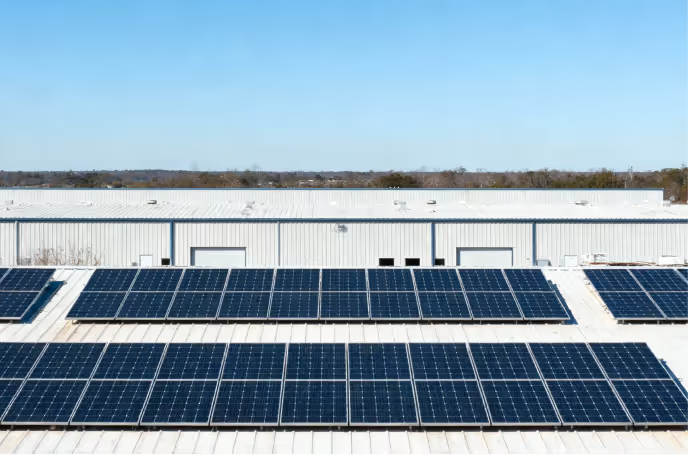
The most profitable rooftop leasing opportunities exist in states with robust community solar programs. These programs allow solar developers to generate renewable energy on your roof and sell the power to local subscribers — while you collect lease payments.
Roof size & condition
- Minimum roof area: At least 20,000–30,000 square feet of unobstructed, usable space
- Roof condition: A roof with at least 10–15 years of useful life remaining (you don't want to remove solar panels for re-roofing mid-contract)
- Structural integrity: Ability to support the weight of solar racking and panels
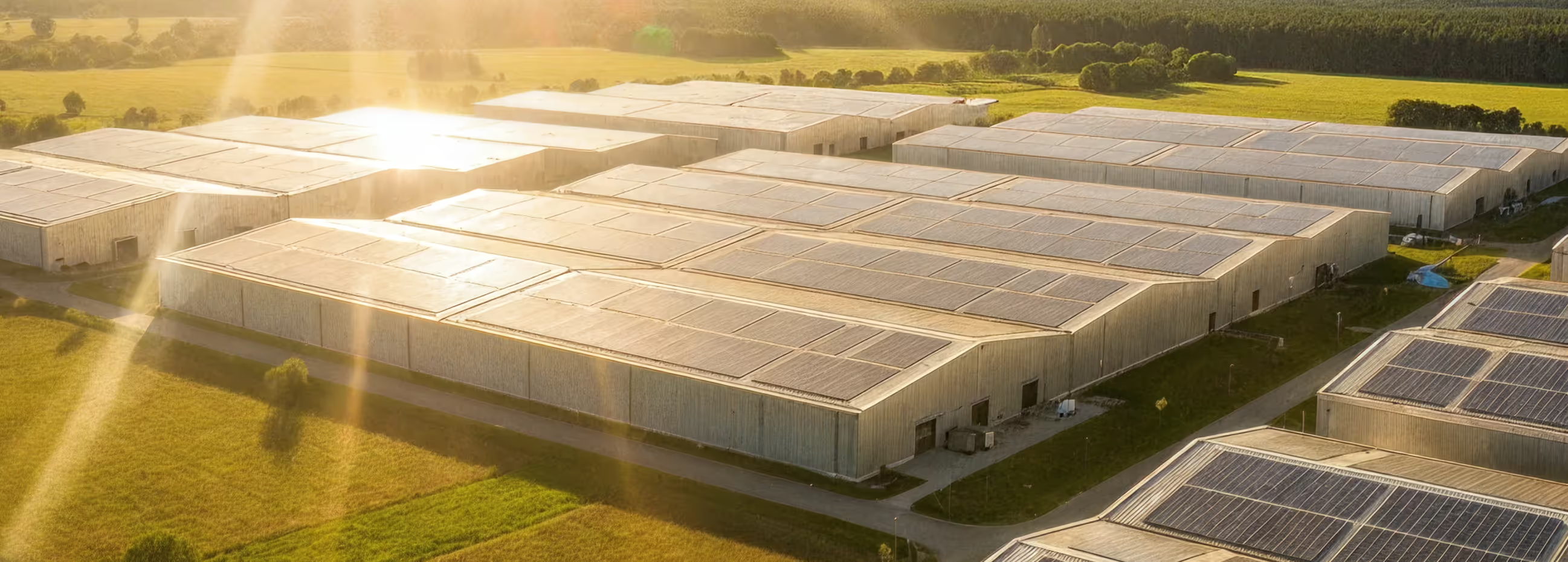
Larger, flat roofs on industrial, logistics, big-box retail, and multifamily properties tend to perform best.
Local utility rates & interconnection
Higher utility rates make solar-generated electricity more valuable. Properties in regions with expensive electricity — and favorable interconnection policies — create better economics for developers, which translates into better lease rates for you.
Zoning & permitting environment
Some municipalities make solar permitting fast and straightforward. Others create costly delays. Properties in solar-friendly jurisdictions move faster and carry less risk for developers — making them more competitive in the bid process.
Property type & tenant mix
While rooftop leasing doesn't require on-site power consumption (the energy goes to the grid for community solar subscribers), certain property types are structurally better suited:
- Warehouse and logistics centers (large, flat roofs)
- Big-box retail (excellent roof area, long-term tenants)
- Multifamily properties (especially in states with dedicated multifamily solar programs)
- Office and industrial parks (portfolio scale opportunities)
3. Why "non-sunny" states outperform sunny ones
Let's get specific. Why does a warehouse in New Jersey often generate better returns than a similar building in Nevada?
Example: Illinois vs. Arizona
Illinois has one of the strongest community solar markets in the country, thanks to their Solar for All initiative. Developers can stack state incentives, RECs, and federal tax credits — creating lease rates for building owners that can range from $1.50 to $3+ per watt of installed capacity, or annual lease payments of $15,000 to $50,000+ depending on roof size.
Arizona, despite 300+ days of sunshine, has a more limited community solar framework and lower REC values. The same building might generate less lease revenue simply because the policy environment doesn't support the same level of developer interest or financial performance.
The takeaway: A 100,000-square-foot roof in Chicago can deliver stronger cash flows than an identical roof in Phoenix — because policy incentives more than compensate for fewer sunny days.
4. How to know which of your properties make sense
This is where many asset managers get stuck. Evaluating solar feasibility across a portfolio used to require expensive consultants, months of analysis, and thick binders of assumptions.
Today, modern solar brokers like Lumen Energy use technology-enabled platforms to provide investment-grade financial analysis at portfolio scale — quickly identifying which properties have the strongest potential.
Step 1: Automated feasibility analysis
Using property data (location, roof size, age, utility provider), our proprietary Lux Engine runs property-specific financial models for every building in your portfolio. This includes:
- State policy and incentive analysis
- Roof suitability screening
- Utility rate and interconnection assessment
- Projected lease revenue and cash flows
You get a ranked list of opportunities — from strongest to weakest — in hours, not weeks.
Step 2: Competitive bidding
Once you've identified your top properties, we put them into our competitive developer marketplace. Multiple vetted solar developers submit proposals, and you see transparent pricing and terms side by side.
This ensures you're getting the best possible lease rates and deal structure — because developers are competing for your rooftop, not the other way around.
Step 3: White-glove service through execution
Your dedicated Lumen Advisor sits on your side of the table throughout the entire process — from contract negotiation through interconnection and system commissioning. We handle the complexity so you can focus on your core business.
5. The bottom line: Let the data decide
If you're an asset manager or building owner evaluating solar, here's what you need to remember
- Policy beats sunshine — The best financial returns come from strong community solar markets, not the sunniest climates.
- Not every property works — Roof size, condition, local incentives, and utility rates all matter.
- Technology makes evaluation fast — Modern portfolio intelligence tools can assess your entire portfolio in days, identifying the properties with the strongest potential.
- Competition drives value — Transparent bidding ensures you're capturing maximum lease revenue.
Solar doesn't have to be confusing. With the right analysis and the right partner, you can turn rooftops into revenue — confidently, profitably, and at scale.
Ready to see which properties make sense? Contact us to get started or get your free assessment here.
6. Frequently Asked Questions
Do I need to invest any capital upfront?
No. Rooftop leasing generates zero CapEx revenue streams — the developer finances, builds, owns, and operates the system. You simply lease your roof and collect payments.
What if my roof needs replacement soon?
Generally, roofs should have at least 10–15 years of remaining useful life. If yours doesn't, we can help you evaluate whether a roof replacement paired with solar makes financial sense, or whether to wait. In many cases, a mid-term roof replacement will be underwritten into leases.
How long do lease agreements typically last?
Most rooftop leases run 20–25 years, with predictable cash flows and built-in escalators.
What about ESG and sustainability goals?
Rooftop solar helps you meet decarbonization goals profitably while contributing to Scope 2 emissions reduction and ESG reporting benefits. It's a win-win for financial performance and corporate sustainability commitments.
How is this different from a Power Purchase Agreement (PPA)?
In a PPA, you or your tenant buys the electricity the system produces (Behind-the-Meter solar). In rooftop leasing for community solar, the power goes to the grid and local subscribers, and you simply collect lease payments. No energy consumption or tenant coordination required, but in many cases, tenants may subscribe their load to the community solar program once the project is live.